what do you use to remove pilling from fabric
Every editorial product is independently selected, though we may exist compensated or receive an affiliate commission if yous buy something through our links. Ratings and prices are authentic and items are in stock as of time of publication.
Here'south everything y'all need to know about pills, those pesky lint assurance that terminate upwardly all over your favorite textiles, including how to remove pilling on clothes.
Your coziest sweater, warmest blanket, most-used bed sheets, and favorite workout pants all take one thing in mutual: They may be prone to small, business firm balls of lint known as pills. Pilling on wearing apparel is caused by normal wear and tear and tin happen even while a garment is being worn.
"For case, when arms swing confronting the body of a shirt, that can event in pills forming on both the torso and the sleeves or cuffs," says Mary Gagliardi, aka "Dr. Laundry," Clorox's in-house scientist and cleaning proficient. "When the material is rubbed against another portion of the garment or another surface, fibers are pulled from within the garment and combine to grade a ball on the surface."
The tendency to pill varies by textile and frequently occurs (or is made worse) in the washer and dryer. Yet even if yous vow to but paw-launder clothes (and who has fourth dimension for that?), y'all won't eliminate pilling entirely. Simply, hey, if you lot tin learn how to unshrink clothes, surely you tin acquire to avoid pills. Thankfully, there are ways to sidestep the pesky balls (similar knowing how to separate laundry properly) and remove pilling on clothes.
How to remove pilling on clothes
You lot're ready to bundle up in your favorite sweater, but with then many pills, it looks a picayune worse for wear. (Is that a wood of pills under your arm?)Don't toss it into the "donate" pile just yet! There are a few ways to remove pilling on wearing apparel. Put in the attempt, and clothes once showing serious signs of age volition look good equally new.
You tin utilise a fabric shaver or pill remover
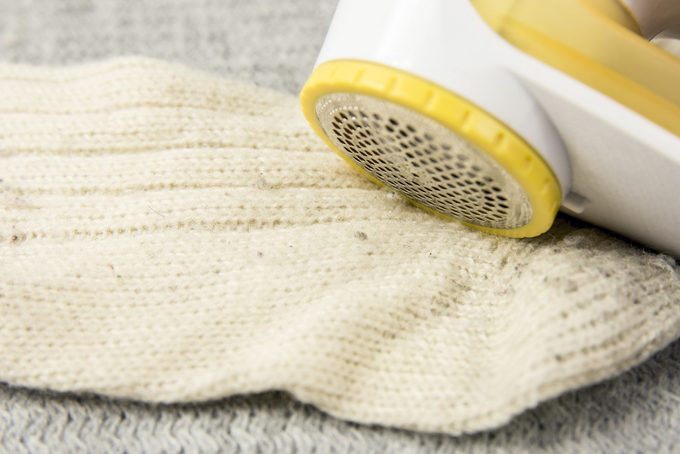
Everyone deals with pilling on wearing apparel. In fact, it's so mutual that companies have created specific tools that gently remove pills from fabrics.
"If any of the pills remain afterwards your clothes are washed and stale, you can advisedly remove them by using a cloth comb or battery-operated pill/lint remover," says Shawn Ashby, a spokesperson for Whirlpool. If yous're willing to shell out money for the relatively inexpensive device, you'll appreciate how easy and effective this method is.
Yous can employ a razor
If you don't have a fabric shaver (and don't want to buy ane), you can too employ a razor to remove material pilling. A uncomplicated disposable razor volition do. Here's how to shave your wearable without causing rips or tears:
- Identify the fabric on a apartment surface.
- Pull the fabric tight.
- Shave abroad the pill, pulling away from the fabric.
You can use laundry detergent with cellulase
De-pilling wear and linens tin be a tedious chore, depending on the extent of the pilling. For a passive form of pill removal, look to your detergent. No, we're not talking nearly switching to one of the best laundry detergents. Instead, utilise a laundry detergent with cellulase.
Cellulase is an enzyme that breaks down fibers to remove stains. Y'all'll find it in products (often labeled "enzyme detergent") such as Persil ProClean. Simply this ingredient goes beyond stain-fighting. "This particular enzyme tin can assist loosen and remove pills in the launder," Ashby says. "Combined with a gentle, cold-h2o cycle, this type of detergent may help reduce or even solve your pilling problem."
How to prevent pilling on apparel
Knowing how to remove pilling on clothes is a useful skill—and will come up in handy when yous discover pills on your sleeve as you're dashing out the door. Just you can save time by preventing pilling in the first place.
Before you brainstorm the laundry process, be certain to read the clothing labels and check the laundry symbols to make sure you're caring for your clothes in the right way. They'll guide you on how to wash, whether you can dry clean at home or demand to take information technology to a pro, the ideal mode to dry, and more. Once y'all've done that, take the steps below to avoid (or at least reduce) material pilling and go along your apparel looking new.
1. Buy sturdy fabrics
When you're out shopping, opt for sturdy fabrics that are tightly woven and fabricated from more than durable materials, suggests Ashby. "Knitted fabrics tend to pill more than woven ones, and clothes made from wool, cotton, polyester, acrylic, and other synthetics tend to develop pills more readily than silk, denim, or linen."
two. Sort laundry carefully
To avert pilling on clothes, it's important y'all understand how to carve up laundry. And, no, that doesn't mean tossing all semi-nighttime clothes in ane pile and whites in another. Sort clothes not merely co-ordinate to color just also by fabric type. This way, heavier fabrics volition be less likely to impairment lighter ones in the wash.
iii. Turn garments within out
Some other manner to preclude pilling in the wash is past turning garments inside out and fastening zippers, buttons, and hooks. Recollect, pilling is a result of abrasion. Friction between fabrics isn't the only thing that can lead to pills. "Rubbing against these hard objects can impairment clothing fibers," says Ashby.
4. Don't overload the auto
Yous know that when wearing apparel rub against each other in the washer or dryer, pills can class. And if an item has already started to pill, information technology can attract other items in the dryer. "The pesky pieces are cleaved clothing fibers on the surface of clothes that become tangled together and concenter loose micro-threads during the wash cycle," says Ashby.
That'southward why it'south so of import yous know how to practise laundry the correct way. We've all been at that place: cramming dress into the washing machine to avert doing a second load. You're going to want to avoid that. Instead, make sure the washer and dryer aren't overloaded. "If your dress tin't move easily in the machine, they'll rub together and cause more friction," he explains.
five. Use fabric softener
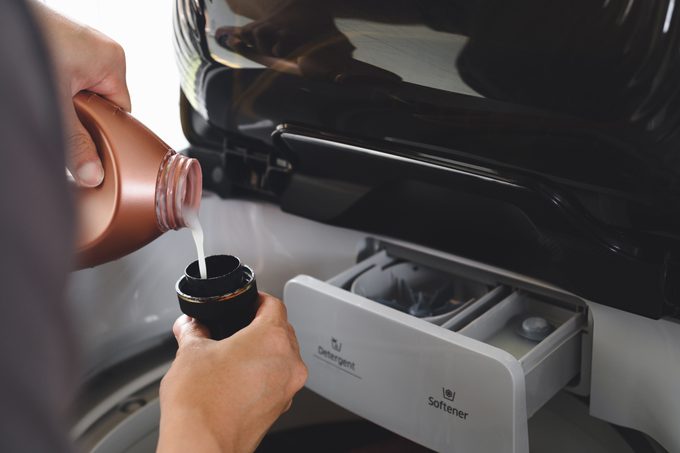
Ashby suggests using fabric softener to help protect wear fibers. What does textile softener do across that? It'll brand your apparel feel soft and smell fresh.
half dozen. Choose the right washer settings
What temperature you wash clothes makes a departure, as does the cycle y'all cull. "Opt for a cold-water wash, using the gentlest cycle possible, or even hand-wash your clothes," Ashby says.
7. Dry with care
Remember, pills don't just class in the launder. They can develop in the dryer, also, so pick your dryer settings wisely. "When the launder is done, use a gentle, low-heat dryer bike, or hang your clothes to air dry," says Ashby.
What fabrics are most probable to pill?
A garment'due south fabric type and construction both affect how likely it is clothes more likely to pill. Shorter fibers that can be pulled from a garment are more prone to pilling. That'due south the case with wool knits, polyester blends, cotton fiber, and cashmere. Longer fibers—including silk and linen—are less likely to pill, says Gagliardi.
"Less tightly twisted yarns made of staple fibers that are loosely knit into a material are much more than likely to pill than tightly twisted yarns tightly woven into a heavyweight fabric," she explains. "Woven fabrics, as long as the yarns are more tightly twisted, are less likely to pill, especially if loose fibers were removed during fabric production."
Here'south another laundry fact: Some fabric manufacturers include a singeing step during fabric production, in which whatsoever protruding fibers are burned abroad before the fabric is printed or dyed.
Is pilling a sign of bad quality?
Piling on clothes is not considered a desirable attribute in a textile, Gagliardi points out, and can be a sign of low quality. "Since garment construction techniques like using longer fibers and more tightly twisting yarns can increase the cost of an detail, it is reasonable to assume that if an item costs more, higher-quality construction techniques were used and it should be able to withstand pilling," she says.
Sources:
- Mary Gagliardi, scientist and cleaning expert with Clorox
- Shawn Ashby, spokesperson for Whirlpool
Source: https://www.rd.com/article/how-to-de-pill-sweaters/
0 Response to "what do you use to remove pilling from fabric"
Post a Comment